
Afro Asian International Trading DMCC


Cotton Value Chain
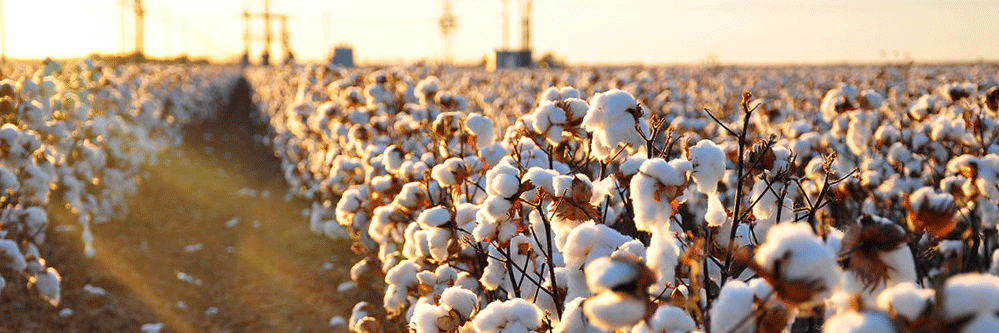
Sourcing and Marketing of Cotton Worldwide:
As a leading player in the cotton industry, we engage in sourcing and marketing cotton on a global scale, leveraging our extensive network of suppliers, partners, and market insights. Our sourcing strategy involves identifying and collaborating with reputable cotton growers and suppliers across various regions, ensuring access to diverse cotton varieties and maintaining supply chain resilience. Through targeted marketing efforts, we promote the quality and sustainability of our cotton products to textile manufacturers, traders, and other stakeholders worldwide, emphasizing our commitment to excellence, ethical practices, and customer satisfaction.

Engagement in the Full Cotton Value Chain:
At our core, we are deeply involved in the entire cotton value chain, from cultivation to processing to distribution. By engaging in each stage of the value chain, we ensure quality control, traceability, and value addition, thereby enhancing the competitiveness and sustainability of our operations. Our comprehensive approach encompasses activities such as cotton sourcing, ginning, oil extraction (if applicable), logistics, and marketing, enabling us to optimize efficiencies, minimize waste, and maximize value creation at every step of the process.

Description of the Cotton Cultivation Process from Grower to Gin to Port to Spinning Mill:
Cotton Cultivation (Grower): The cotton cultivation process begins with farmers who cultivate cotton plants in suitable agro-climatic conditions. These farmers follow best practices in soil preparation, planting, irrigation, and pest management to ensure optimal crop growth and yield. Throughout the growing season, they monitor the crop's progress and undertake necessary measures to maintain its health and productivity.
Harvesting and Ginning: Once the cotton plants reach maturity, farmers harvest the cotton bolls, typically using mechanical pickers or manual labor. The harvested cotton is then transported to nearby ginning facilities, where the cotton fibers are separated from the seeds and other impurities through the ginning process. Ginning involves several stages, including cleaning, separating, and pressing, resulting in the production of cotton lint and cottonseed.
Port and Logistics: After ginning, the cotton lint undergoes further processing to enhance its quality and suitability for various end uses. The lint is then packed into bales and transported to port facilities for export or to spinning mills for further processing. Throughout this stage, efficient logistics and transportation play a critical role in ensuring timely delivery and minimizing handling-related damages.
Spinning Mill: At spinning mills, the cotton lint undergoes spinning, where it is converted into yarn through processes such as carding, drawing, and spinning. The quality of the yarn produced depends on factors such as fiber length, strength, and consistency, which are influenced by the quality of the raw cotton and the efficiency of ginning and cleaning processes. The spun yarn is then used by textile manufacturers to produce a wide range of cotton-based products, including apparel, home textiles, and industrial fabrics.

Emphasis on Quality, Sustainability, and Community Impact:
Throughout the cotton value chain, we place a strong emphasis on quality, sustainability, and community impact. We work closely with cotton growers to promote sustainable agricultural practices, including water conservation, soil health management, and biodiversity preservation. By prioritizing quality at every stage of production, from cultivation to processing to distribution, we ensure that our cotton products meet the highest standards of excellence and integrity. Additionally, we are committed to making a positive impact on the communities where we operate, through initiatives such as capacity building, education, healthcare, and infrastructure development, thereby contributing to the social and economic well-being of local communities and fostering long-term sustainability in the cotton industry.